
Homeowners' pick for heating and cooling across the Arkansas Ozarks and Little Red River country
CO Alarm Sounding
Your carbon monoxide alarm is going off and you are standing in the hallway trying to decide if it is real. Treat it as real. Get everyone outside, then call 911 or your gas utility from outside. Once the building has been cleared and checked, we handle the heating side of it across Arkansas, Missouri, Mississippi, Oklahoma and Tennessee.
Call (888) 381-2953- A real person answers
- Open 7 days
- Written quote before work starts
Taking calls until 5:00 PM CT
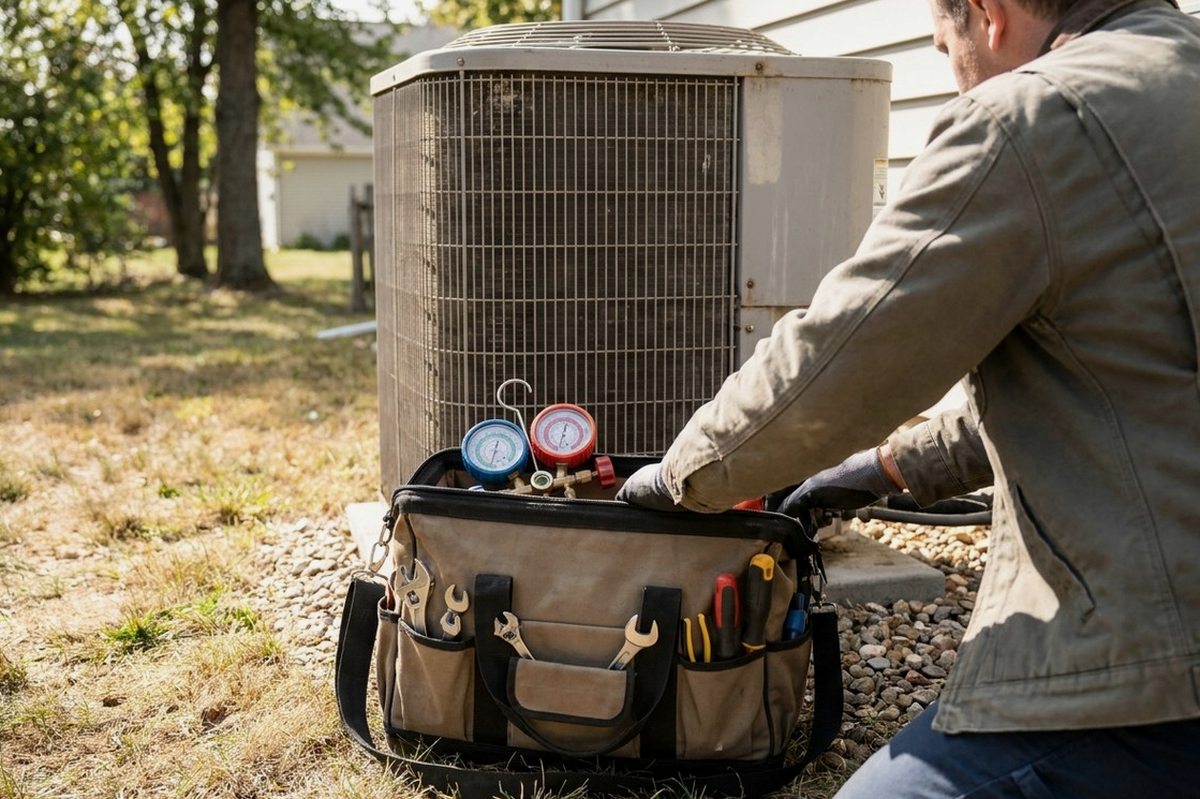
Ozark Comfort Heating & Air service team · field-reviewed before publishing
The First Five Minutes, In Order
Do these in order and do not stop to investigate. 1. Get every person and pet outside into fresh air, straight away. 2. Leave the door open behind you if you can do it without going back through the house. 3. From outside, call 911 or your gas utility. 4. Do a head count and stay outside until the fire department or the utility tells you the building is clear. 5. If anyone has a headache, nausea, dizziness or confusion, tell the dispatcher that first, because those are symptoms of carbon monoxide exposure and they change how the call is handled.
What Not To Do
Do not go back inside for a phone, a pet carrier or paperwork. Do not open the furnace or water heater to look for a problem, and do not try to relight anything. Do not shut off gas valves inside the building. Do not switch the alarm off and go back to bed, and do not pull the batteries to stop the noise. Do not start the car in an attached garage while you wait. If you smell gas as well as hearing the alarm, avoid light switches and garage door openers, because a spark is a separate hazard. Wait outside for the responders.
What The Fire Department Or Utility Will Do
They arrive with a meter and read the actual carbon monoxide level in parts per million, room by room. If they find a reading, they will usually shut off the gas to the equipment that is producing it and tag it out of service. Sometimes they find nothing and the alarm was at end of life, which happens more than people expect with units older than seven to ten years. Either way, they do not repair heating equipment. Their job ends when the building is safe. That is the point where you call a heating and cooling company.
When To Call Us, And What We Look At
Call us once responders have cleared the building and told you what they found. We work on gas furnaces, propane furnaces, older heat pumps with gas or propane backup, and wood-stove setups feeding into ducted systems, which is a common mix on hill-country routes across the region. We inspect the heat exchanger, check the flue and vent connector for rust, separation and blockage, look at combustion air supply, and test draft under real operating conditions. If a crack or a venting fault is confirmed, we tell you plainly whether it is a repair or a replacement. We will not put a tagged unit back into service on a guess.
Keeping It From Happening Again
Carbon monoxide alarms belong on every level of the house and outside sleeping areas, and they need replacing on the schedule printed on the back of the unit. Test them monthly with the button. Keep the area around the furnace clear of stored boxes, because combustion air matters. Have the heating side checked before the first cold snap rather than during it, especially with propane equipment and anything past fifteen years old. Keep vent terminations clear of snow, leaves and nesting birds. If your system has been short-cycling, making a new sound or leaving soot marks near a register, book heating repair before winter loads it up.
CO Alarm Sounding — what people ask
Can I go back inside if the alarm stops on its own?
No. An alarm that quiets down only means the level dropped below its trigger point, not that the source is gone. Stay outside until 911 or the gas utility measures the air and tells you the building is clear.
My alarm chirped once instead of sounding a full alert. Is that carbon monoxide?
A single chirp on a repeating pattern is usually a low battery or an end-of-life signal, not a detection. A real alarm is loud and continuous. Read the manual for your unit, and if you are unsure, treat it as real and get outside.
Does a cracked heat exchanger always mean a new furnace?
Not always, though it often does on older equipment where parts are scarce. We inspect the exchanger, flue and draft, then tell you plainly what we found and whether a repair is realistic before you spend anything on replacement.
How it works
- Step 1
Tell us the symptom
Call or fill in the quote form with what the system is doing. Warm air, no air, short cycling, a smell, a breaker that keeps tripping. That detail helps us load the right parts before we roll.
- Step 2
We schedule around travel
Hill-country routes take time, so we give you a realistic window instead of a guess. If you are on a long county road, we tell you that up front and keep you posted if the day shifts.
- Step 3
Diagnose, then explain
We test the system, find the actual fault and walk you through what failed and what the repair involves. You decide before we start. If a part has to be ordered, we say when it lands.
- A real person answers
- Open 7 days
- Written quote before work starts
Why homeowners call us
- Older systems are normal herePlenty of homes on our routes run a heat pump from two decades back, a propane furnace and a wood stove for the cold snaps. We repair what you have rather than pushing you toward replacement on the first visit.
- Heating and cooling bothSame crew handles air conditioning repair in summer and heating repair in winter. That means we know your system's history when the season flips, and we are not learning your ductwork from scratch in January.
- We say what we do not knowIf a fault is intermittent, we tell you that instead of replacing parts on a hunch. Sometimes the honest answer is a monitoring period or a second visit when the weather brings the problem back.
- Regional coverage, local paceWe cover Arkansas, Missouri, Mississippi, Oklahoma and Tennessee. Travel time is part of every job we quote, so you get a window that accounts for the drive rather than a promise that falls apart.
- All major brands, gas & electricEvery major HVAC brand, gas and electric, handled by an independent crew.
- Straight answersNot worth fixing? We say that out loud, and often it saves you the visit fee.
About this guide
Safe checks done and it still misbehaves? That's a real fault
Describe what you found and we'll take it from there. Booking takes about a minute.
- A real person answers
- Open 7 days
- Written quotes
- All major brands
- Gas & electric
Rather not call? Get a free quote →