
Homeowners' pick for heating and cooling across the Arkansas Ozarks and Little Red River country
Duct Sealing or Duct Replacement
Some rooms never get warm, the AC runs and runs, and someone told you the ductwork is the problem. Now you are stuck deciding whether to seal what you have or tear it out and start over. We look at duct systems all over Arkansas, Missouri, Mississippi, Oklahoma and Tennessee, and here is how we read that trade-off honestly.
Call (888) 381-2953- A real person answers
- Open 7 days
- Written quote before work starts
Taking calls until 5:00 PM CT
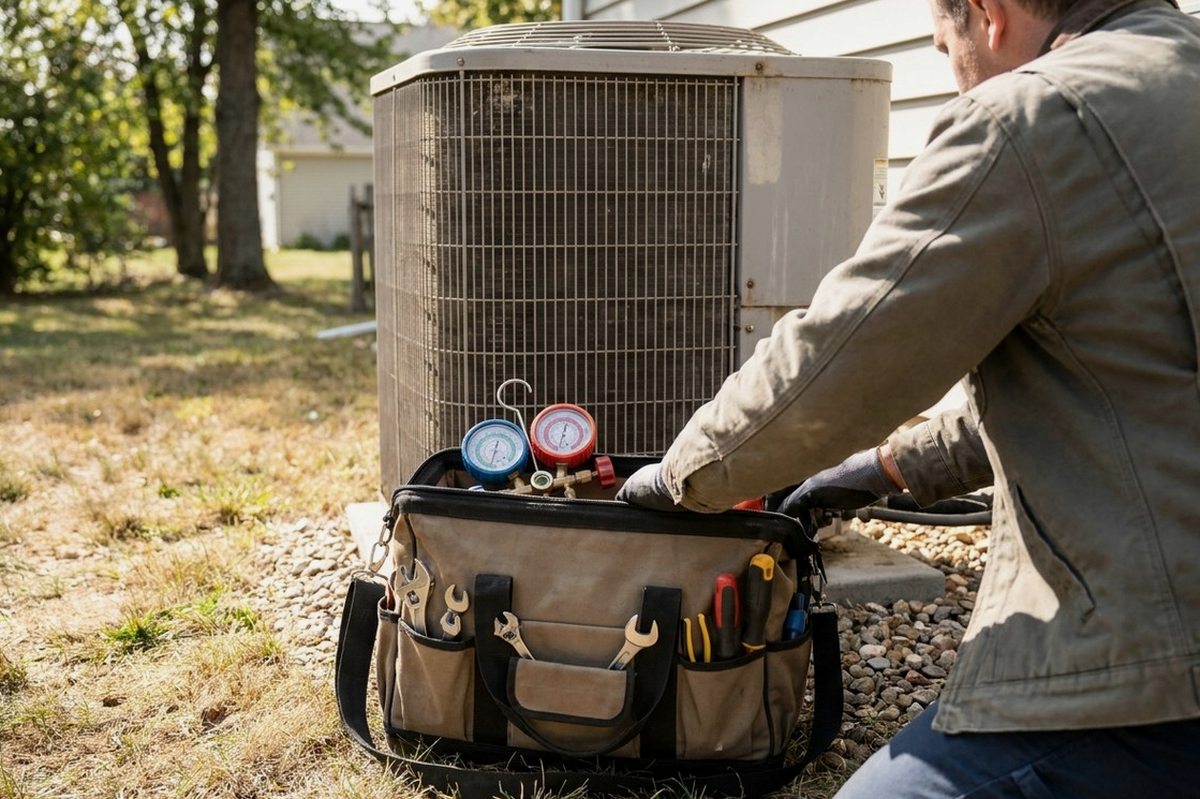
Ozark Comfort Heating & Air service team · field-reviewed before publishing
What Actually Decides It: Age, Fault Type, and What the Duct Is Made Of
Sealing works when the duct body is sound and the leaks are at joints, boots and takeoffs. That is most of what we find. Replacement enters the conversation when the material itself has failed: flex duct with the inner liner torn loose, insulation soaked and packed down from a crawlspace leak, or old fiberboard trunk lines crumbling at the edges. Age matters less than condition. We have sealed forty-year-old metal trunks that were in fine shape and replaced flex runs that were under fifteen. The fault type tells you more than the install date ever will.
Sizing and Matching, the Part Homeowners Rarely Hear About
A duct system has to match the equipment attached to it. Plenty of homes across the region got a bigger or newer system dropped onto ductwork sized for something else, sometimes decades earlier. Sealing a duct that is too small does not fix a too-small duct. It can actually raise static pressure and make the blower work harder. So before we quote any sealing, we look at whether the trunk and branch sizing suits the air the system needs to move. If the ductwork was never right, patching leaks is money spent on the wrong problem.
How We Think About It On A Visit
We start in the living space, not the attic. Which rooms are off, how far off, and does it change with the season. Then we go where the ducts live: attic, crawlspace, basement, or that closet chase nobody has opened in years. We look at supply and return both, since a starved return causes symptoms people blame on supply runs. We check connections at the air handler, the boots at each register, and any spot where the duct crosses unconditioned space. Then we tell you what we saw and give you the options in plain language, including doing nothing yet.
Parts, Access, and Travel Time
Access changes the math. A crawlspace you can sit up in is one job. A knee-wall attic in a hill-country house where the duct runs behind framing is another, and sometimes reaching a leak costs more labor than replacing the run outright. Older systems can also use fittings and duct sizes nobody stocks anymore, so a repair turns into a fabrication job. On longer routes we plan for that ahead of the visit and bring what we expect to need, because a second trip to fetch a transition fitting helps nobody.
Honest Cases Where Replacement Wins
Replacement is the right call when flex duct has collapsed or kinked, when rodents have chewed through liners, when insulation is wet or mold has grown inside the duct, or when the runs are so undersized that no amount of sealing will move enough air. It also wins when you are already replacing the heating and cooling equipment and the existing ducts were built for a different setup. In those cases sealing buys you a season, maybe two, and you pay again later. We will say so straight rather than sell you tape and mastic on a system that needs rebuilding.
Duct Sealing or Duct Replacement — what people ask
Can I just seal the ducts myself with tape?
Standard cloth duct tape dries out and lets go, often within a year or two in an attic. Proper sealing uses mastic or foil tape rated for the job, applied to clean surfaces. Reaching every joint is the hard part.
Will sealing ducts fix a room that is always too hot?
Sometimes. If the leak is on that room's run, yes. If the branch is undersized, the register is blocked, or the return is starved, sealing will not change much. We check all of those before recommending work.
How do I know if my ducts are leaking?
Common signs are uneven room temperatures, dusty registers, high runtimes and visible gaps or hanging insulation where you can see the ducts. A hands-on inspection of the joints and boots confirms it. Call us and we will look.
How it works
- Step 1
Tell us the symptom
Call or fill in the quote form with what the system is doing. Warm air, no air, short cycling, a smell, a breaker that keeps tripping. That detail helps us load the right parts before we roll.
- Step 2
We schedule around travel
Hill-country routes take time, so we give you a realistic window instead of a guess. If you are on a long county road, we tell you that up front and keep you posted if the day shifts.
- Step 3
Diagnose, then explain
We test the system, find the actual fault and walk you through what failed and what the repair involves. You decide before we start. If a part has to be ordered, we say when it lands.
- A real person answers
- Open 7 days
- Written quote before work starts
Why homeowners call us
- Older systems are normal herePlenty of homes on our routes run a heat pump from two decades back, a propane furnace and a wood stove for the cold snaps. We repair what you have rather than pushing you toward replacement on the first visit.
- Heating and cooling bothSame crew handles air conditioning repair in summer and heating repair in winter. That means we know your system's history when the season flips, and we are not learning your ductwork from scratch in January.
- We say what we do not knowIf a fault is intermittent, we tell you that instead of replacing parts on a hunch. Sometimes the honest answer is a monitoring period or a second visit when the weather brings the problem back.
- Regional coverage, local paceWe cover Arkansas, Missouri, Mississippi, Oklahoma and Tennessee. Travel time is part of every job we quote, so you get a window that accounts for the drive rather than a promise that falls apart.
- All major brands, gas & electricEvery major HVAC brand, gas and electric, handled by an independent crew.
- Straight answersNot worth fixing? We say that out loud, and often it saves you the visit fee.
About this guide
Safe checks done and it still misbehaves? That's a real fault
Bring your notes from the checks to the call and booking takes no time.
- A real person answers
- Open 7 days
- Written quotes
- All major brands
- Gas & electric
Rather not call? Get a free quote →